





How to Choose the Right Wedge Wire Screen Slot Size and Aspect Ratio
To ensure optimal filtration efficiency and long-lasting performance, it is essential to understand two critical parameters of wedge wire screens: slot size and slot aspect ratio.
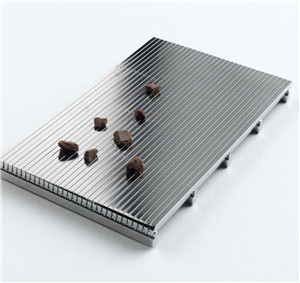
1. Know Your Project Needs
Before looking at screen specifications, you need to analyze the environment where the wedge wire screen will operate.
What material are you filtering? Are you separating solids from liquids, or grading dry particles? The first step is to know the size, shape, and roughness of your material.
What is your desired flow rate? High-volume operations require screens that maximize open area without sacrificing strength.
What are the operating conditions? Take note of the temperature, pressure, and chemical exposure. Corrosive environments will require specialized stainless steel grades (316L).
2. Choosing the Right Slot Size
The slot size refers to the gap or width of the openings between the V-shaped wires on the screen. This is the most important factor determining what passes through your system and what gets caught.
Measurement: Slot sizes are typically measured in microns (μm) for ultra-fine filtration or millimeters (mm) for coarser separation.
The Rule: To successfully retain a specific particle, your slot size must be smaller than the minimum size of that particle.
Why Wedge Wire Prevents Clogging
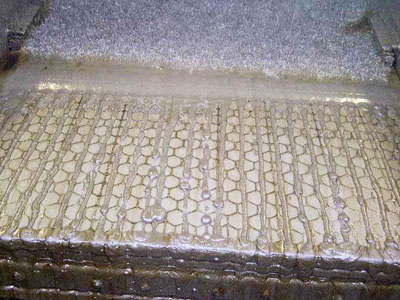
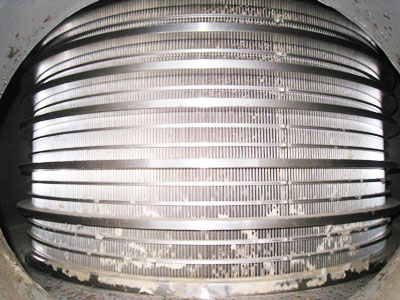
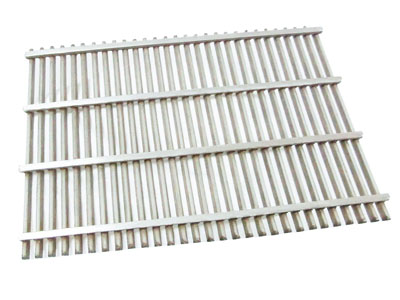
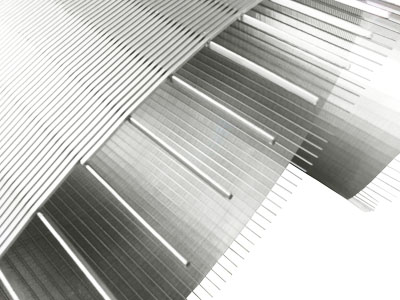
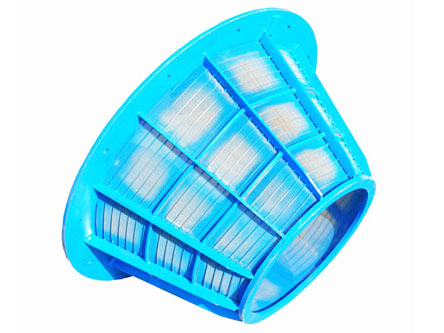
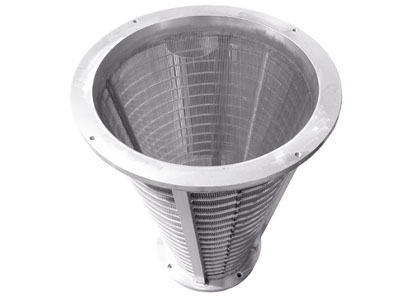
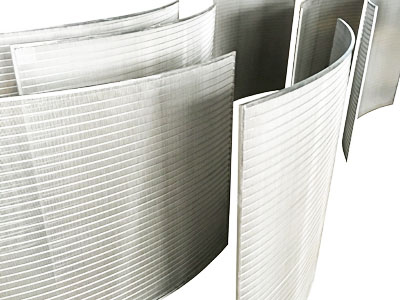
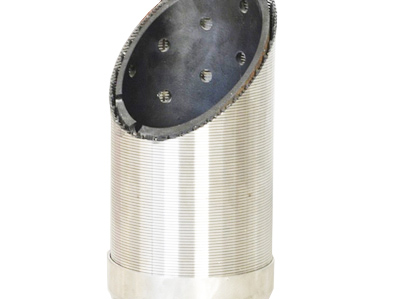
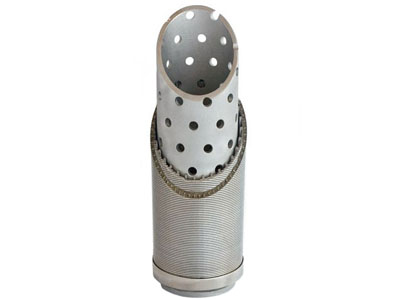
Wedge wire features a unique continuous slot created by V-shaped profiles. The opening is narrowest at the surface and widens inwardly. This means particles that pass through the surface slot will fall freely through the screen without causing clogging.
3. Defining the Slot Aspect Ratio
While slot size determines filtration accuracy, the Slot Aspect Ratio determines how the screen will behave under physical stress.
What is Slot Aspect Ratio?
It is the ratio of the slot width (the gap) to the profile wire width. Finding the right balance between these two dimensions is crucial.
To help you choose, here is how the aspect ratio affects performance:
High Aspect Ratio (Narrow Slots / Wider Wires)
Best for: Fine filtration and high precision.
advantages: Excellent filtration efficiency; easily captures tiny particles and impurities.
disadvantages: Because the wires take up more surface area, the total open area might be reduced, and the screen may be less durable under extreme high-pressure backwashing.
Low Aspect Ratio (Wider Slots / Narrower Wires)
Best for: Coarse separation and heavy-duty, high-volume processing.
advantages: Highly robust, handles heavy structural loads, resists high pressure, and offers a longer wear life.
disadvantages: Not suitable for fine filtration; smaller particles will pass right through.
Comparison Table
Aspect Ratio Choice | Best Application | Advantages | Disadvantages |
High Aspect Ratio | Fine particle filtration, water treatment | Superior filtration accuracy | Lower structural tolerance |
Low Aspect Ratio | Mining, dewatering, heavy industrial | Extreme durability & high flow | Lower filtration precision |
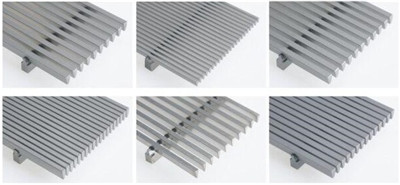
4. Why Getting this Balance Important
Selecting the perfect match of slot size and aspect ratio yields immediate benefits for your facility:
Reduced Maintenance Costs: Fewer clogs and structural failures mean less downtime.
Energy Efficiency: Optimized open areas ensure a steady flow rate, reducing the strain on your pumps and motors.
Longer Lifespan: A screen tailored to your specific pressure and abrasive conditions will last longer
Need a Custom Wedge Wire Screen Solution?
Whether you are working in wastewater treatment, food and beverage processing, mining, or petrochemicals, we are here to help.
If you have specific drawings, technical drawings, or unique operating requirements, contact our engineering team today. We provide customized wedge wire solutions designed precisely for your application's success.